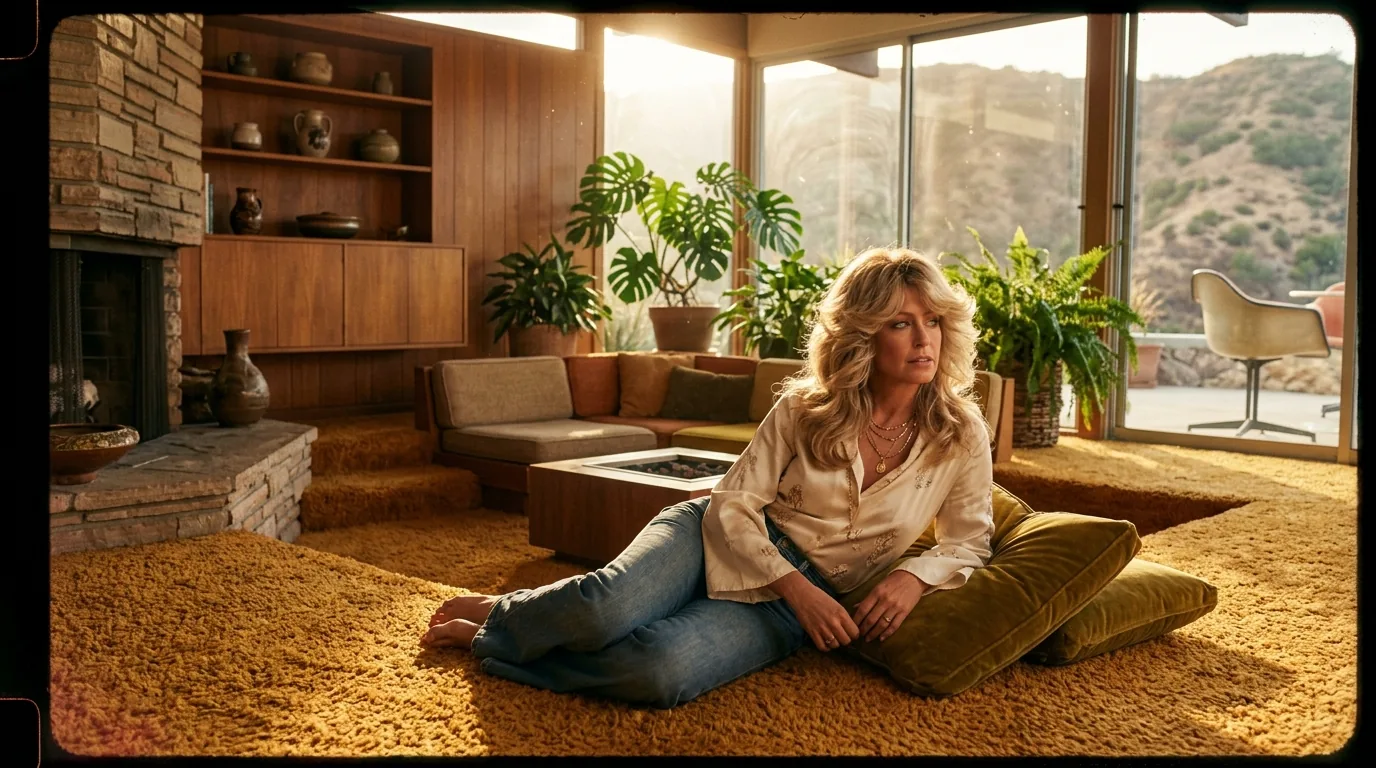
Why 1970s Kodachrome 64 Is the Ultimate Antidote to "AI Plastic Skin"
The most pervasive flaw across modern generative image tools is the "AI plastic sheen"—waxy, unnatural skin textures caused by web datasets flooded with smartphone beauty filters. When you prompt for a modern photo, the latent space gravitates toward artificial smoothing.
The ultimate solution is anchoring your generation in 1970s Kodachrome 64 slide film. Developed using Eastman Kodak's legendary K-14 chemical process (where dyes were introduced during processing rather than embedded in the emulsion layers), Kodachrome produced extraordinary sharpness, rich warm reds, earthy golden greens, and velvety deep shadows. In diffusion checkpoints, Kodachrome tokens shift the model into training weights derived from archival 35mm SLR film scans—instantly restoring natural skin pores, fine peach fuzz, authentic freckles, and physical micro-textures.
Optical Physics: Canon FD 50mm f/1.4, Leica M4 & Amber Lens Flare
Film stock is only half of the photographic equation; the vintage lens mounted to the camera is equally vital. Modern computer-designed lenses are engineered for maximum clinical sharpness and zero chromatic aberration. In contrast, 1970s optical glass—such as the Canon FD 50mm f/1.4 S.S.C. or Leica 50mm Summilux—exhibited gorgeous physical signatures:
- Warm Single-Coating Flare: When shooting toward the afternoon sun, light bounces inside the vintage lens elements, producing warm amber and golden streak flares across the subject.
- Gentle Spherical Aberration: A subtle softness at wide apertures (f/1.4 to f/2.0) that naturally flatters facial contours without looking like a digital blur filter.
- Circular Bokeh Swirl: Organic circular highlight orbs in the background that ground the subject in three-dimensional space.
Designing the 1970s Environment: Walnut Paneling, Shag Rugs & Sunken Lounges
To achieve total period immersion, the background environment must be as meticulously crafted as the model herself. The 1970s witnessed a distinctive architectural movement that celebrated warm, organic materials. Enrich your prompts with authentic 1970s interior tokens:
sunken conversation pit lounge with mustard-gold velvet upholsterywarm oiled walnut wood wall panelinggolden shag carpeting, macramé plant hangers with lush monstera foliageafternoon sunlight streaming through horizontal wooden window blinds
Feathered Hair, Bohemian Silk & Natural 70s Styling
Hair in the 1970s was defined by volume, movement, and natural texture—immortalized by Farrah Fawcett and the bohemian California rock scene. When prompting, specify voluminous feathered 1970s layered haircut, center part, soft natural waves.
For wardrobe, focus on natural fabrics: sheer embroidered bohemian silk blouse, bell-bottom denim jeans with brass rivets, crochet halter top, turquoise and hammered-brass jewelry. In our lab testing, these descriptors consistently prevent the AI from generating modern spandex or contemporary fashion items.
Studio Benchmark: GeneratePorn AI vs. Promptchan AI vs. OurDream AI
We stress-tested the leading platforms on 1970s analog accuracy:
- GeneratePorn AI (Score: 9.8/10): The lab champion for 1970s 35mm photorealism. Its realism engine produces astonishingly lifelike skin texture, organic silver-halide grain clumping, and authentic golden-hour lens flares with zero setup required.
- Promptchan AI (Score: 9.6/10): The preferred choice for creators who want granular control over film grain LoRAs, canvas inpainting, and custom prompt weighting.
- OurDream AI (Score: 9.5/10): Top-rated for interactive 1970s cinema roleplay, letting you interact with bohemian muses in extended narrative chats with matching photo generation.
Color Grading and Grain Calibration in Modern AI Workflows
To prevent your 1970s generations from looking over-processed, adhere to these two golden rules:
- Lower Your CFG Scale: Keep CFG strictly between
4.5 and 5.5. Modern default CFG scales (7.0+) clip highlight values and force unnaturally harsh contrast into the frame. - Positive Grain Prompting: Always include
organic 35mm silver-halide film grain, natural dye diffusion, warm highlight halation. This instructs the model to distribute texture evenly across midtones and shadows.