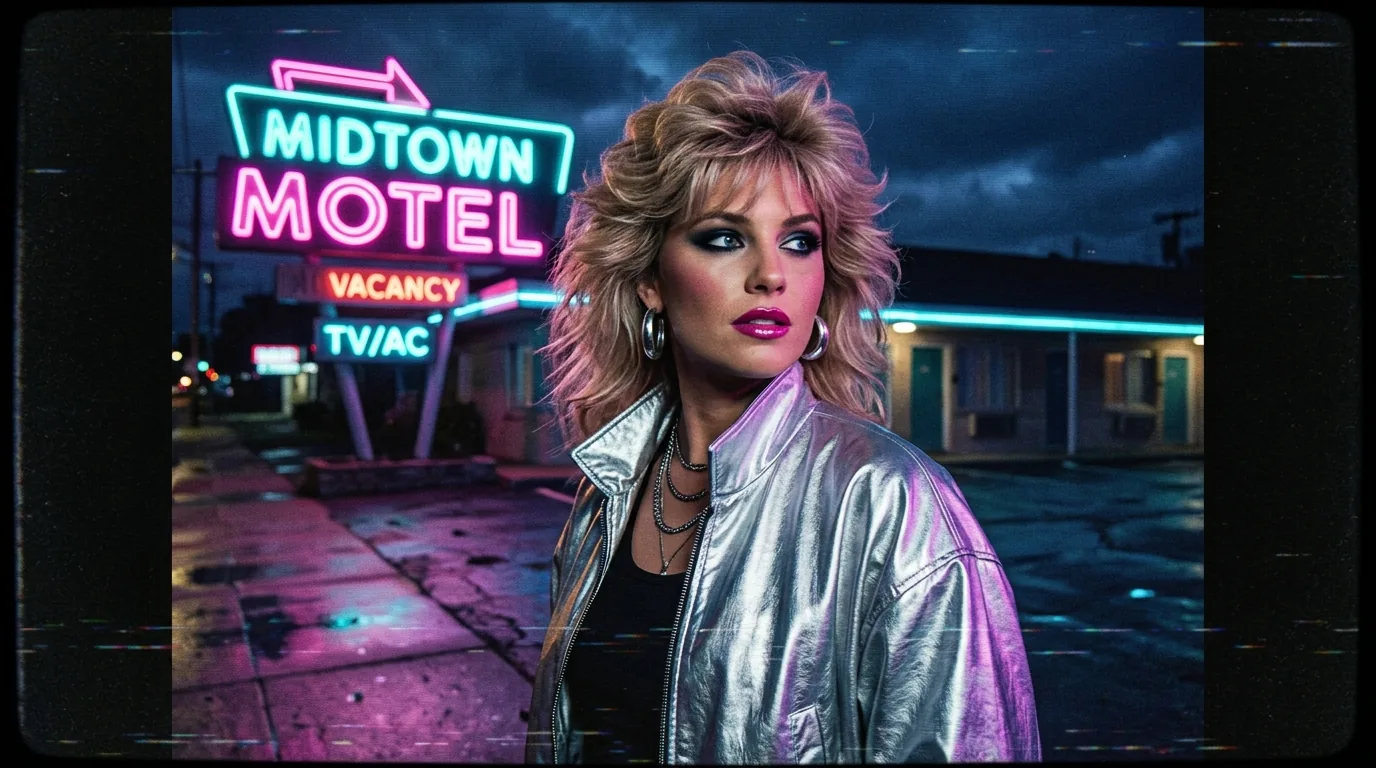
Why 1980s VHS & Analog Tape Aesthetics Convert So Well on Video Studios
In the realm of AI video generation, rendering hyper-clean modern 4K digital video frequently exposes temporal shimmer—tiny micro-warps along high-contrast digital edges that betray the AI origins of the clip. However, when you render a scene in an authentic 1980s VHS camcorder or Betamax tape aesthetic, an extraordinary visual synergy takes place.
The natural artifacts of analog magnetic video—horizontal cathode-ray scanlines, slight head-switching tracking jitters, soft composite color bleed, and warm phosphor bloom—completely mask diffusion temporal inconsistencies! A subtle camera shake or edge shimmer is perceived by the human brain not as an AI glitch, but as genuine 1987 camcorder tape jitter, resulting in unmatched viewer retention and realism.
The Anatomy of a Magnetic Video Signal: Chroma Bleed, Scanlines & Head Tracking
To engineer convincing VHS stills and video loops, you must understand the technical limitations of 1980s consumer composite video (NTSC/PAL). Consumer VHS recorded color (chrominance) at a vastly lower resolution than brightness (luminance), resulting in specific signal artifacts:
- Chroma Bleed & Delay: Vibrant reds and magentas naturally smear 1–2 pixels to the right of their outlines.
- CRT Horizontal Scanlines: Visible alternating scanline rows produced by the electron guns inside a cathode-ray tube television (such as a Sony Trinitron).
- Phosphor Glow / Tube Blooming: Bright light sources (neon motel tubes, headlights) bloom outwards into surrounding dark pixels with a soft, warm aura.
- Bottom Tracking Jitter: A faint band of static or tracking noise along the bottom 5% of the frame caused by the helical video heads clearing the tape edge.
The 1980s Neon-Noir Aesthetic: Miami Motel Signs, Metallic Jackets & Big Hair
Styling is paramount to selling the 1980s retro synth-noir fantasy. Anchor your subject in late-night urban environments:
- Setting:
wet palm-lined boulevard, glowing magenta and cyan neon motel marquee, flickering vacancy sign, dark humid night sky. - Wardrobe:
oversized metallic silver bomber jacket, black mesh bodysuit, chunky geometric acrylic earrings, studded leather belt. - Hairstyle & Makeup:
voluminous teased 1980s hair with side volume, heavy dark eyeliner, frosted fuchsia lip gloss.
Converting VHS Stills into Mesmerizing Motion Video Loops
Generating a breathtaking VHS still frame is merely the first step. On Promptchan AI's Video Studio, you can instantly animate your image into a seamless 5-to-8-second motion loop:
- Import Still: Load your verified 1987 VHS camcorder portrait into the Image-to-Video tab.
- Motion Prompt: Add motion guidance:
subtle breathing, gentle wind blowing through hair, slow handheld camcorder sway, neon motel sign buzzing and flickering softly. - Motion Strength: Keep the motion slider between
3 and 5. Low motion values maintain facial identity and prevent warping while delivering authentic analog home-video ambiance.
Studio Benchmark: Promptchan AI vs. GeneratePorn AI vs. Secrets AI
Our lab audited the top platforms for 1980s analog tape creation:
- Promptchan AI (Score: 9.7/10): The definitive leader for 1980s VHS thanks to its integrated motion video generator, custom VHS LoRAs, and scanline control.
- GeneratePorn AI (Score: 9.5/10): Fantastic for instant 1980s boudoir and neon-lit glamour stills with rich analog color warmth.
- Secrets AI (Score: 9.4/10): Best for private, late-night noir roleplay conversations with 1980s personas in an encrypted environment.
On-Screen Display (OSD) Timestamps and Cathode-Ray Tube Phosphor Glow
The final touch of 1980s authenticity is the camcorder On-Screen Display (OSD). In Promptchan AI and Flux-based models, you can prompt for exact camcorder overlays: "PLAY ▷ OCT 18 1987" green pixelated timestamp in top-left corner, SP tracking indicator.
This minor typographic detail immediately signals found-footage authenticity, transforming a standard portrait into an evocative artifact of 1980s pop culture.